

Natural and inherently sustainable product
Ceramic facing bricks and fired clay pavers are inherently sustainable and durable, as they are made solely from natural raw materials such as clay, sand, water, oxygen, and fire. Thanks to these raw materials and the production process, they have an exceptionally long service life of more than 160 years in some cases. Brick is, after all, a material designed to last for generations, as demonstrated by the average service life of a brick building, which is estimated to exceed 100 years.
Moreover, the raw material of clay is a renewable raw material thanks to a constant process of natural depositing. For centuries, the clay has served as a raw material for brick production, a tradition that Vande Moortel continues to this day - in-house.
“100% natural, down to their very essence”
Thanks to the natural ingredients of clay, sand, loam and minerals, which are combined according to unique recipes, we can obtain a fully natural end product in a rich palette of colours and nuances. The colour and shades develop naturally during the manufacturing process and are inherent to the stone, all the way down to its mass. This allows authentic facing bricks and clay pavers to retain their colour without fading, wear or discolouration due to impact or external factors. It guarantees a lasting aesthetic result, even after years of intensive use or exposure to the weather and the wind.
Ceramic building materials require no maintenance, significantly reducing their environmental impact. This makes bricks some of the most durable building materials available. Moreover, bricks are made of inert materials - they do not react with other substances and do not emit toxic or allergenic substances. The result is that they do not pose any risk of soil pollution.
In addition to their advantageous and durable properties, bricks also lend an authentic and timeless feel to facades. The most sustainable building is one that is never demolished. A brick building has a certain panache, exuding character and authenticity. Indeed, good architecture rarely gets demolished. The product as such is not trend-driven, but can nevertheless adapt flexibly to changing trends in colour, texture, or format. Brick is robust, low-maintenance, non-combustible, and able to withstand the extreme conditions of our climate. Architects, designers and clients deliberately choose facing brick for these durable and aesthetic qualities, combined with its great design flexibility and wide range of applications.
Responsible clay sourcing through local quarrying
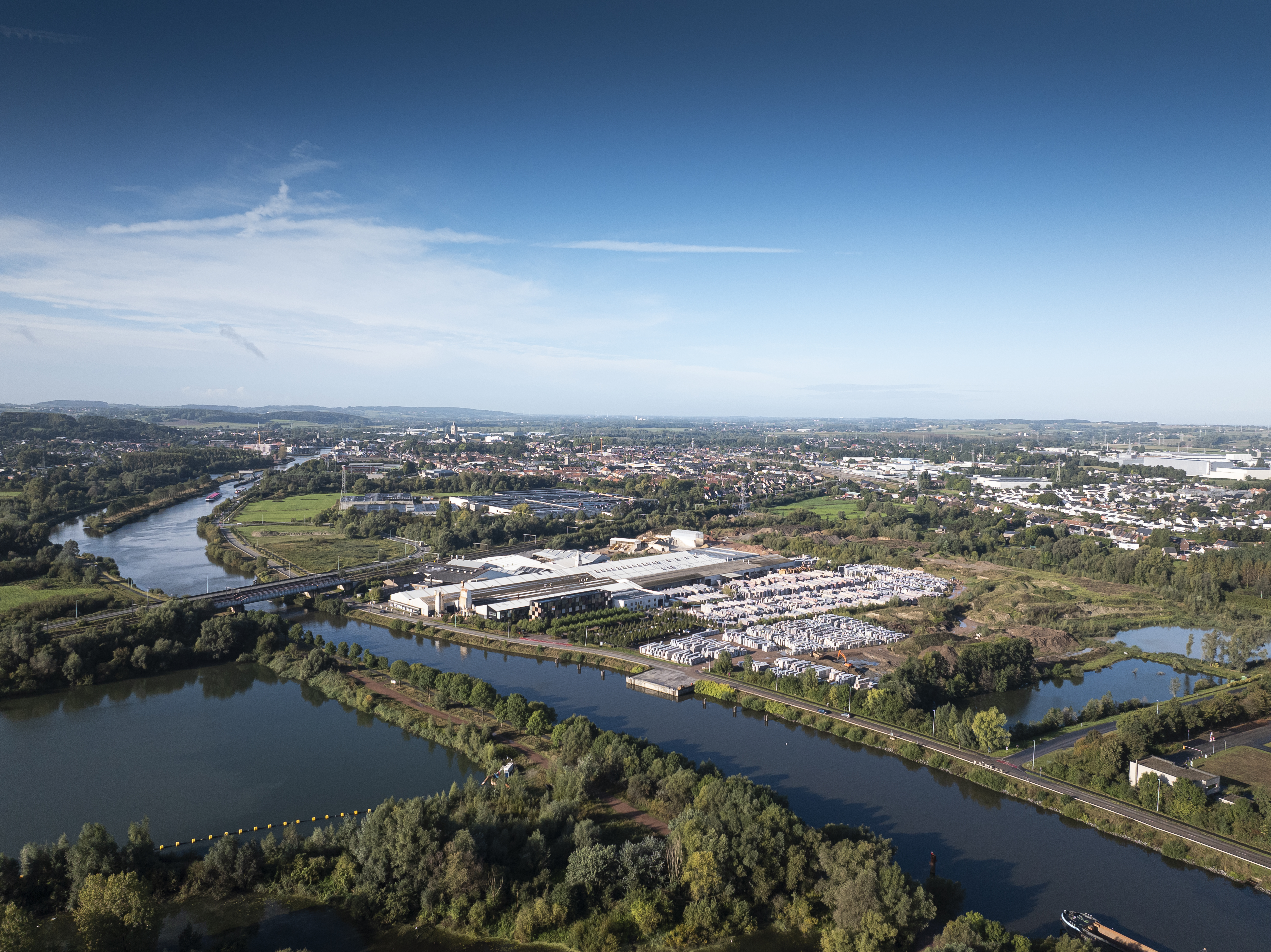
The brickworks has been located on the banks of the Scheldt Valley since its foundation. The raw materials for facing bricks and clay pavers, namely sand and clay, are primarily locally sourced around the brickworks itself, thanks to its location. As a result, clay transport is limited and the environmental footprint is minimised. We always aim to minimise impact on the surroundings.
Use of secondary raw materials
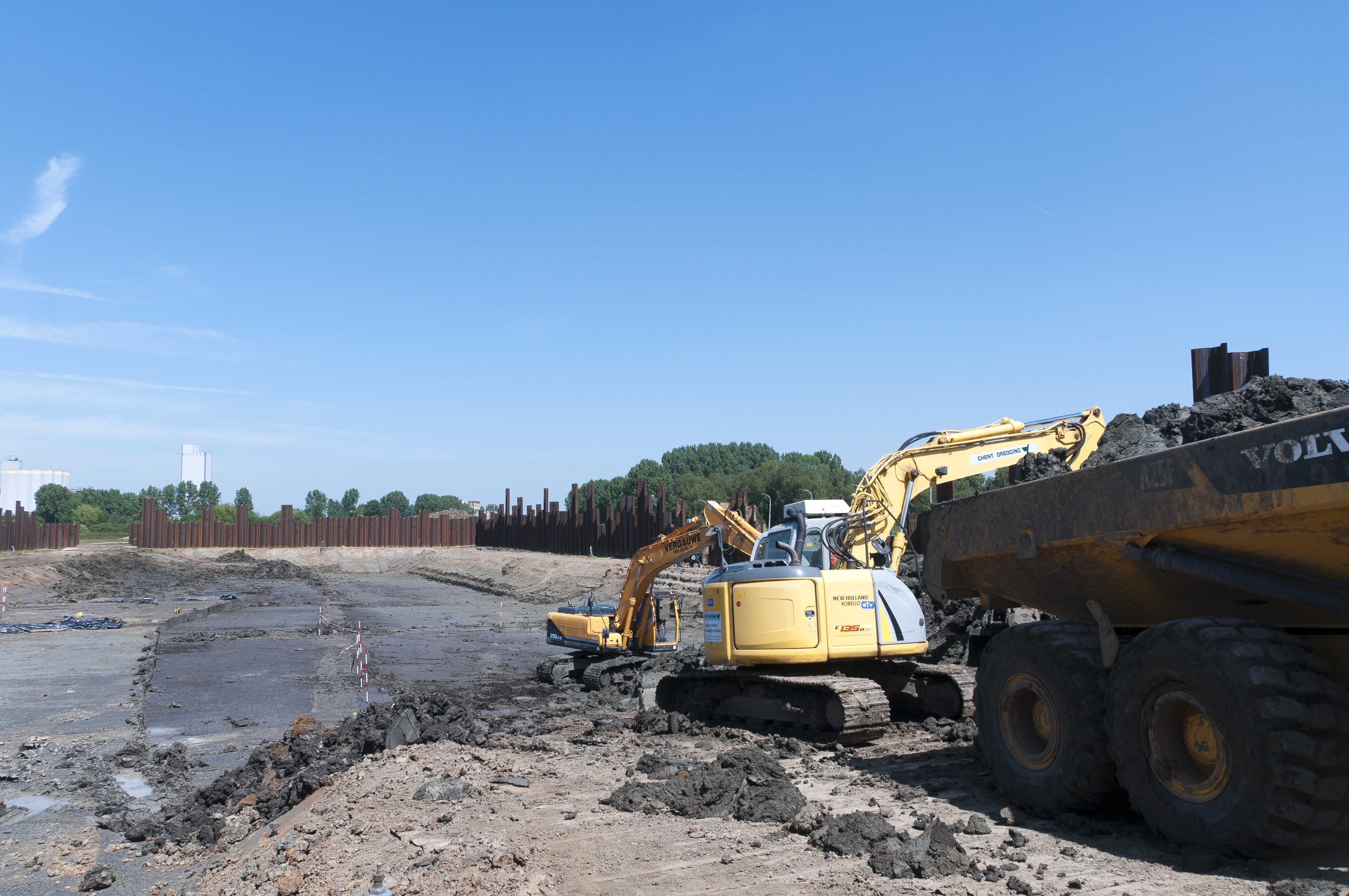
In order to spare our own quarries, where possible we also use secondary raw materials for all facing bricks and clay pavers, such as loam and clay, which are released during infrastructure works and construction projects. These raw materials regularly become available during excavation works for nearby construction sites. During the infrastructure works at the Sluis in Kerkhove, for example, Vande Moortel recovered some 72,500 m³ of clay. This raw material was released during these works and found a new life in Oudenaarde at the brickworks. Moreover, the entire transport was carried out through water transport on the Schelde, thus avoiding the need for 5,200 trucks. This way, Vande Moortel achieved two of its objectives: maximising the use and recovery of secondary raw materials, and commitment to sustainable transport via the waterways.
Valuable after-use of extraction sites with due regard for biodiversity
After extracting and processing the raw materials, the site undergoes a redevelopment that also enhances biodiversity. As an example, the former extraction pit of the Brickworks on the right bank of the Schelde is being transformed into an area of high biodiversity values. It is Vande Moortel’s ambition, in consultation with the various stakeholders, to develop an area as a marshy wetland with high biodiversity values, including birds, amphibians, insects, reed beds, and other valuable vegetation. “In the past, we were able to extract clay, a renewable raw material, from this site. Today, we begin with the after-use and aim for an attractive natural area, a home for a variety of fauna and flora, and a place where people enjoy spending time,” says Peter Vande Moortel. This way, through the sustainable extraction of our locally sourced raw materials, we contribute to biodiversity.
Green Deals
Many sustainable and circular innovations originate from the Green Deals, with our company continuing to actively engage in an innovative learning network to share practical experiences with other construction companies, building materials manufacturers, local and regional authorities, private developers, researchers, and other organisations. Vande Moortel also supports the Green Deal Natural Gardens, together with all trade associations from the garden sector, an initiative of the Tuin+ Knowledge Centre and the Erasmushogeschool.
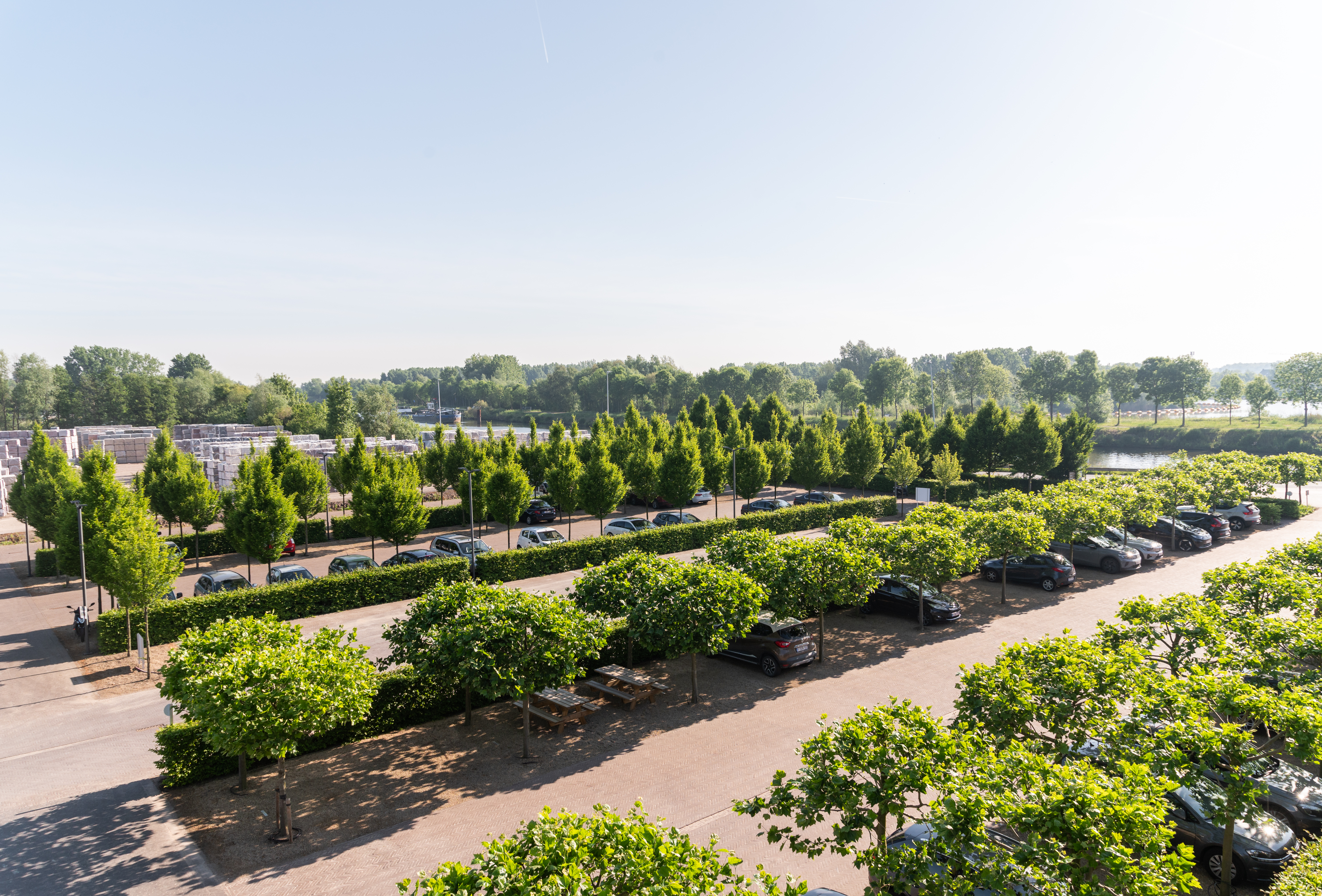
One such initiative is the redevelopment of our own site, where we transformed the former concreted yard into a modern, functional space with a focus on nature. In total, over 200 trees were planted and permeable surfacing was installed using brick rubble and pavers in combination with H2O Natural Clay Paving Sand. With the transition of our site from concrete surfacing to a modern, functional space fully attentive to nature and climate, we are part of the Flemish Government’s “Green Deal for Companies and Biodiversity”.
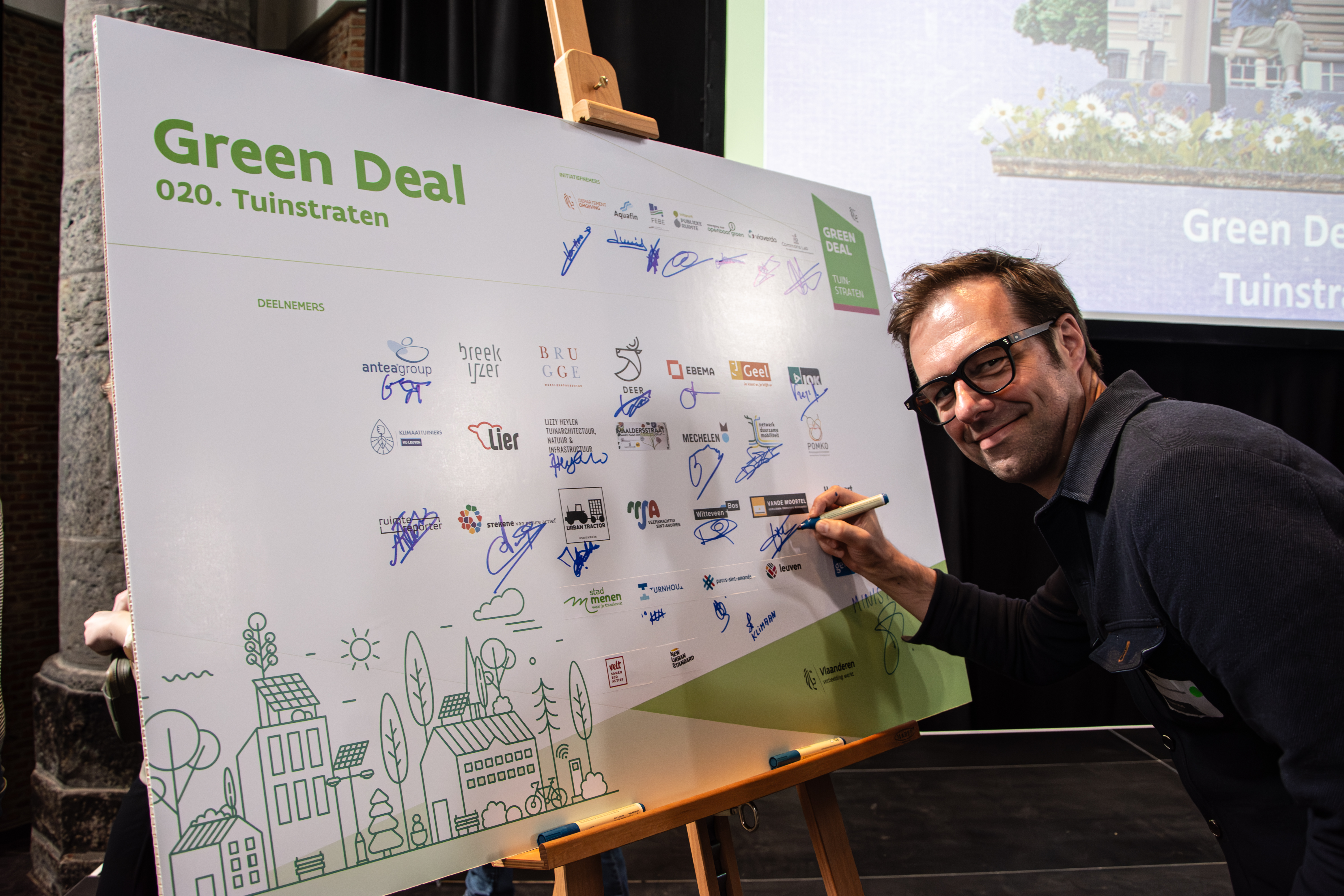
As a participant in the Green Deal Garden Streets, we are initiating a shift in Flanders to structurally create more garden streets. By bringing together councils, residents, businesses and other stakeholders, we aim to raise awareness, build knowledge and provide practical support to transform ordinary streets into thriving garden streets. Our aim is for an ambitious 1,000 completed garden streets by 2030.
The objectives of the initiators and the 100 companies currently participating are:
- Enhancing biodiversity in Flanders
- Using gardens to help address drought problems
- Introducing circular principles in garden design
- Creating a sustainable green zone from all the gardens combined